You sent the quote on Tuesday. It is now the following Monday. Nothing.
Most sole traders leave it there. Chasing feels like pressure. It feels like admitting you need the work. So the quote sits in the sent folder, and you tell yourself they will get in touch if they want to go ahead.
They will not. Not because they chose someone else, though they might have. Because they are busy, the email is under forty others, and they have not decided. A quote without a follow-up is not a quote waiting for an answer. It is a quote that has been quietly closed.
What silence says
Here is the part nobody tells you. The customer does not read your silence as respectful. They read it as disinterest.
When we asked customers of tradespeople what frustrated them most, the answer was not price and it was not quality. It was communication, and the sharpest version was the tradesperson who sends a quote and disappears. To the customer, the person who follows up is the person who wants the job and will turn up when they say they will. The one who goes quiet has already told them something.
One landscaper put it plainly on a trade forum: when he is the one buying, he tends to go with the person who follows up. Most people do.
A follow-up is a courtesy
Reframe it. You are not chasing. You are making it easy to say yes.
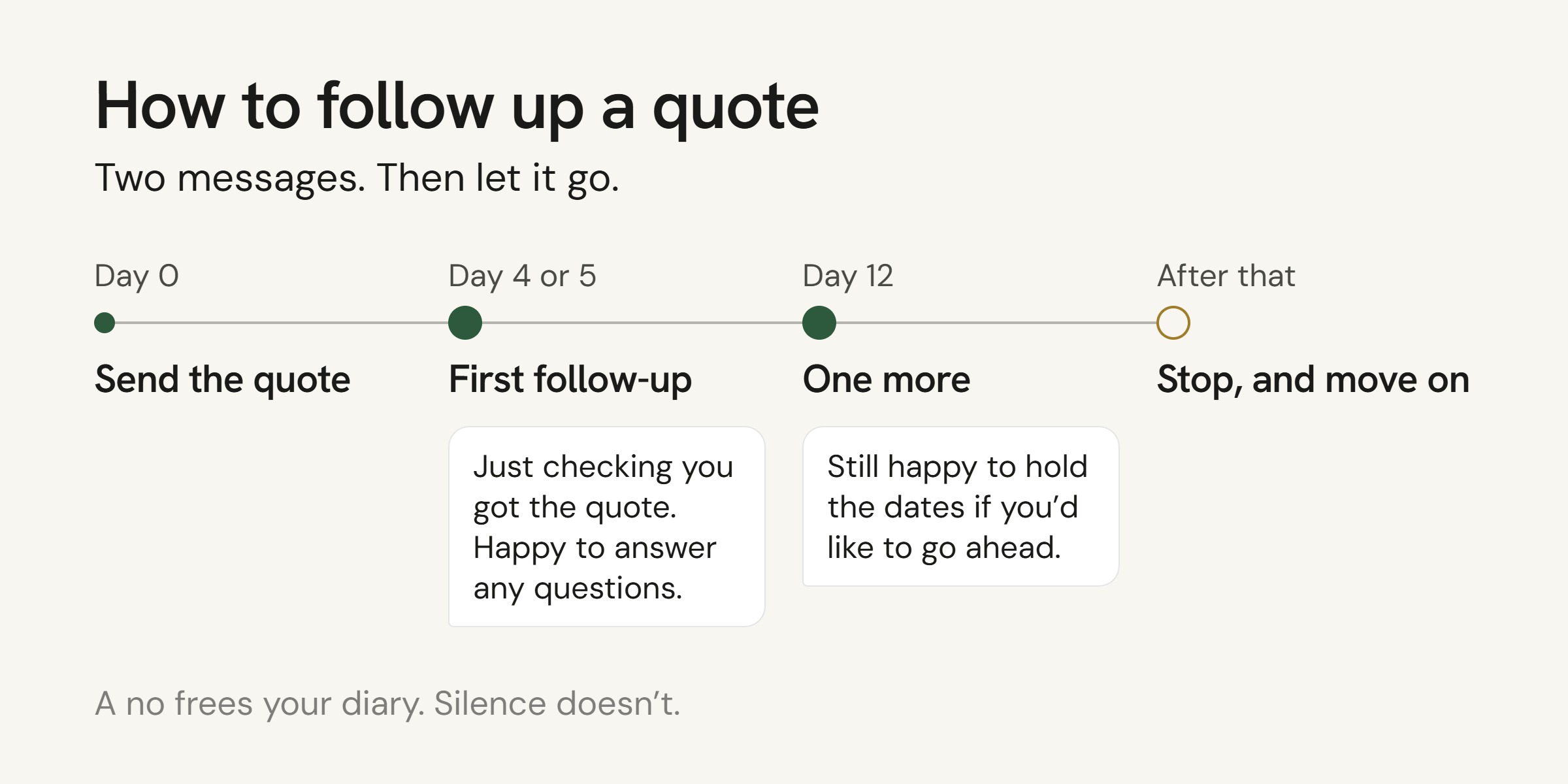
A short message four or five days after the quote does three things. It puts the job back in front of them. It gives them a simple way to ask the question they have been meaning to ask. And it lets them say no, which is useful too, because a no frees your diary and a silence does not.
It does not need to be clever.
"Hi Sarah, just checking you received the quote for the back garden. Happy to answer any questions, and I can hold the dates in the week of the 15th if you would like to go ahead."
That is it. One message. No apology for sending it, no pressure, no discount to sweeten it. If there is still nothing after another week, one more. Then you stop, and you move on without it circling in your head.
The real reason it does not happen
It is not that sole traders do not know this. It is that the follow-up has to be remembered on a Monday morning, in the van, with three other jobs on. Nobody writes "chase Sarah" on a list. The quote gets sent and the memory of it fades the moment the next job starts.
That is not a character flaw. It is what happens when one person is the sales team, the workforce and the accounts department at once. Follow-up is the first thing to drop because nothing forces it to happen.
So the fix is not to feel more confident about chasing. The fix is to take remembering out of it. Every quote gets a follow-up date the moment it is sent, and the reminder arrives whether you are thinking about it or not. 1pc does exactly that, so the nudge comes to you and the quote never goes cold because you were busy doing the work.
Send the quote. Follow it up. Let the silence be theirs, not yours.